When you click on links to various merchants on this site and make a purchase, this can result in this site earning a commission. Affiliate programs and affiliations include, but are not limited to, the eBay Partner Network.
Weight79.0 g
0.079 kg
2.79 oz
0.174 lb
395 ct⸻DimensionsLength: 66.38 mm⸻Converted Dimensions6.64 cm
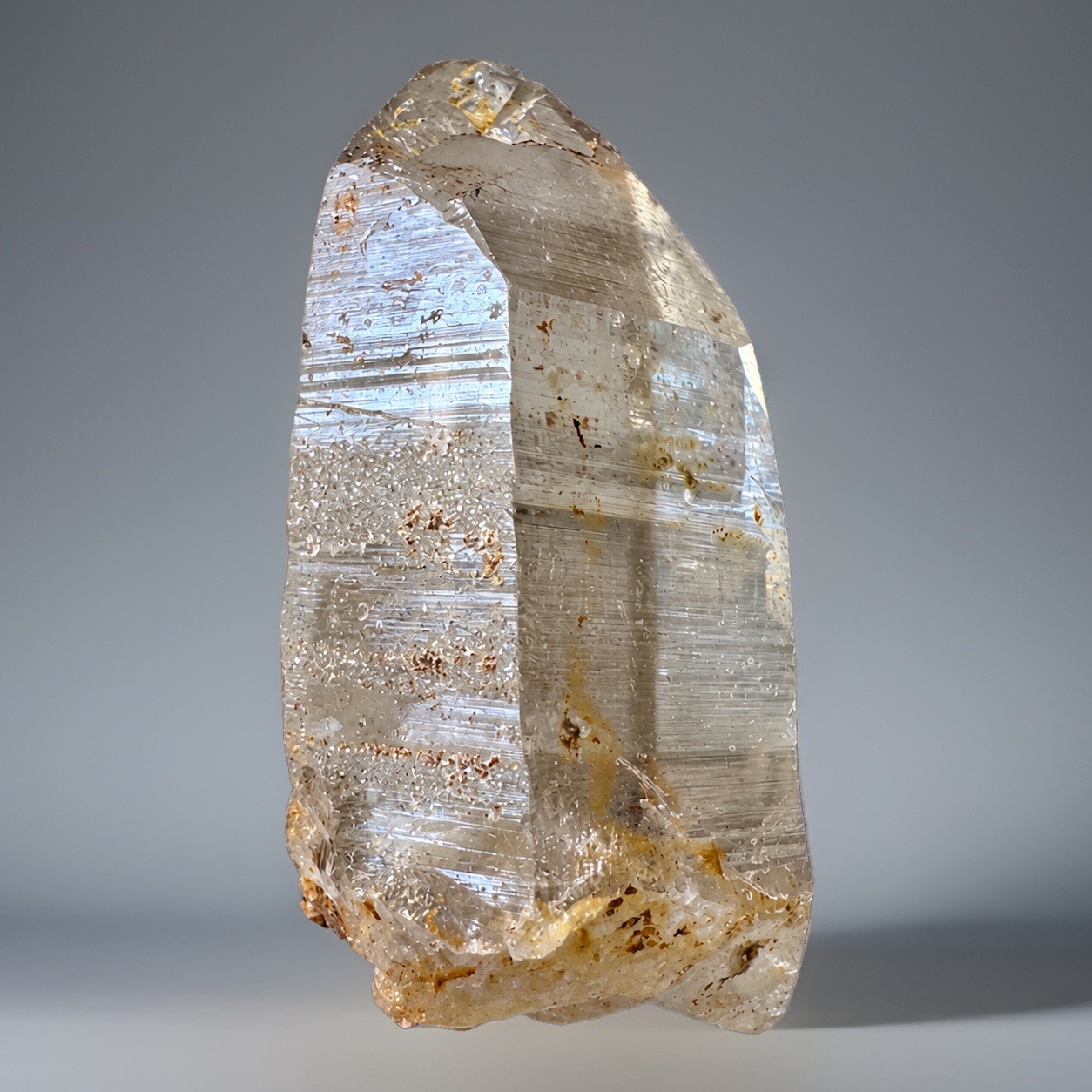
2.61 in⸻🌟 DescriptionThis piece comes from my personal collection, carefully kept as a natural mineral display specimen.“Golden Light Veil” is a natural Himalayan quartz crystal from Hashupi, Pakistan, displaying a delicate pale tea-to-champagne golden tone with exceptionally high transparency. The color remains light and elegant rather than dark, allowing the internal structures and natural growth history to remain clearly visible from multiple angles.The most distinctive feature of this specimen is its exceptionally strong Akashic-style growth lines. Multiple prism faces are covered with dense, deeply developed horizontal striations, forming finely layered patterns across large areas of the crystal. These lines are much more pronounced than ordinary surface striations and give the specimen a strong architectural appearance.Under direct sunlight or strong side lighting, the combination of high clarity and dense parallel growth lines creates a striking luminous curtain-like optical effect. Light passes through the transparent body and reflects along the layered surface structures, producing bands of brightness, soft internal glow, and a subtle halo-like appearance as the crystal is rotated.The crystal shows particularly strong side transparency, with a clean glassy body that allows light to travel through easily. This clarity makes the surface growth lines appear even more dramatic and gives the crystal a layered, almost illuminated appearance when viewed against light.Several areas show complex layered growth history, including stepped growth structures, overlapping growth boundaries, and fine linear patterns. Around the termination, the crystal also displays natural interference-like growth textures and irregular layered formations, adding additional detail to the upper surfaces.Several faces show small record keeper–style triangular markings, naturally integrated into the broader growth patterns. These triangular structures become especially visible under directional lighting and add another collectible feature to the specimen.The reverse side displays areas of secondary recrystallization, where numerous tiny secondary quartz crystals have developed over earlier surfaces. These fine crystals create a sparkling, textured appearance and clearly contrast with the smoother, highly transparent primary faces. The layered secondary growth gives the specimen additional geological complexity and records multiple stages of natural crystallization.Internally, the crystal remains remarkably clear while containing delicate veil-like clouds, wispy internal structures, and fine droplet-like inclusions. These inclusions resemble tiny suspended rain or dew-like points and create a subtle internal landscape without significantly reducing the overall transparency.Small areas of natural golden, yellow-brown, and warm amber-toned iron-oxide staining are visible along some growth lines, edges, surface depressions, and lower portions of the specimen. These mineral traces contribute to the crystal’s pale golden Himalayan character while remaining subtle enough to preserve its bright, transparent appearance.The lower portions also retain natural irregular growth surfaces and traces of recrystallization, giving the specimen a distinctly natural geological appearance. The contrast between clear prism faces, deep horizontal growth lines, secondary crystalline textures, internal veils, and warm mineral staining becomes especially attractive when the crystal is turned slowly under sunlight.Overall, “Golden Light Veil” is distinguished by its pale tea-golden coloration, exceptional side clarity, deeply developed Akashic-style growth lines, layered growth history, secondary recrystallization, record keeper–style triangular markings, delicate internal veils, droplet-like inclusions, and natural iron-oxide staining.Its strongest visual feature appears under sunlight or directional side lighting, where the dense growth lines interact with the transparent quartz body to create a beautiful luminous curtain and halo-like effect, giving the specimen its distinctive character and name.